If you're considering a ductless system for your home, one of the first questions you'll likely ask is: how much does a mini split cost to run? The answer depends on several factors, including the unit's efficiency rating, your local electricity prices, climate, and how often you use it. On average, most homeowners find that mini splits are significantly more affordable to operate than traditional central air systems or window units, but understanding the specific numbers can help you budget accurately and decide if this investment makes sense for your home.
In this guide, we'll break down typical operating costs, explore what affects your monthly bill, and share practical tips to keep expenses as low as possible.
Understanding Mini Split Electricity Usage
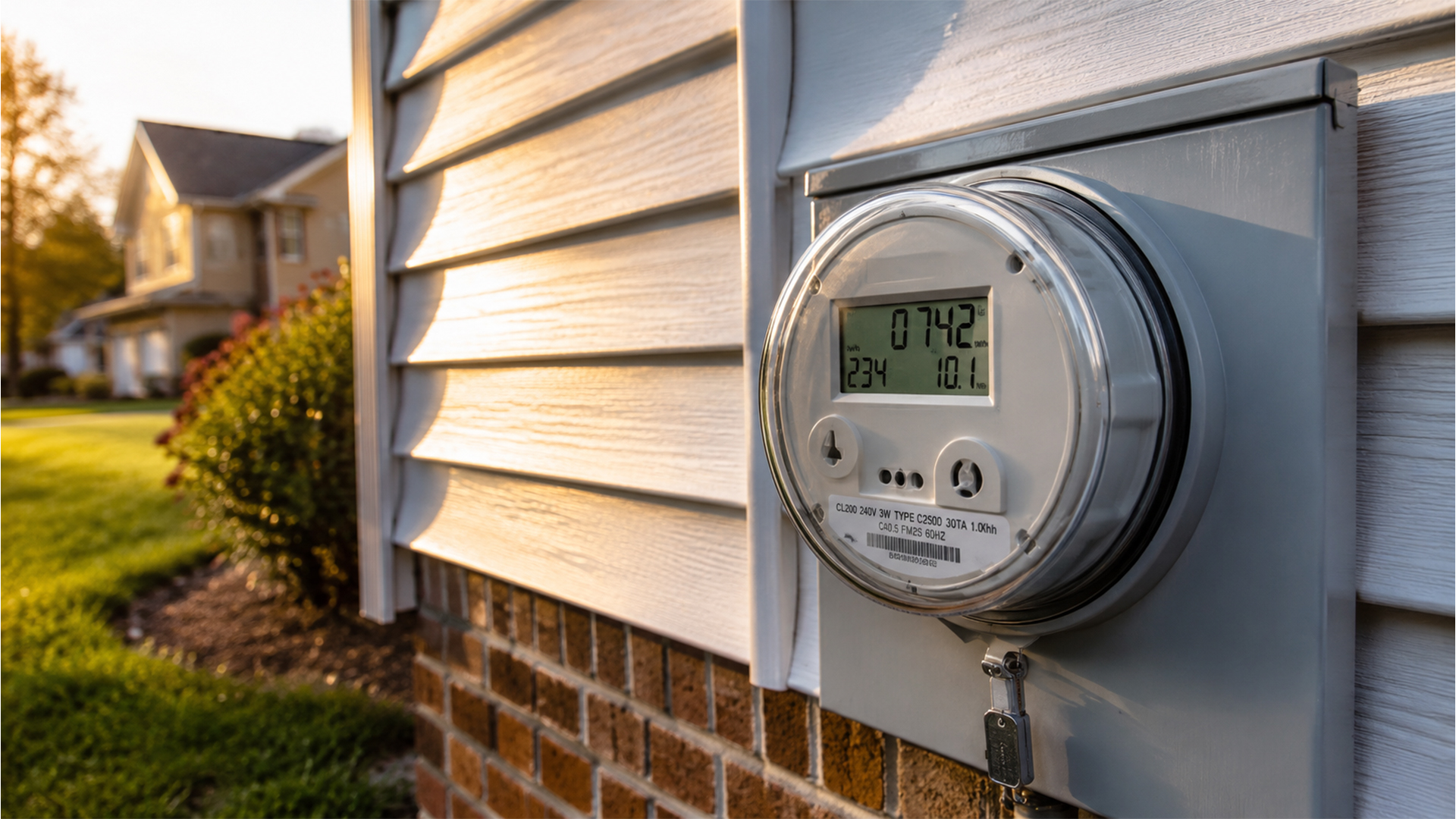
Before diving into dollar figures, it helps to understand how mini split electricity usage is measured. Most units are rated in terms of British Thermal Units (BTUs) for cooling/heating capacity and SEER (Seasonal Energy Efficiency Ratio) for efficiency. The higher the SEER rating, the less electricity the unit consumes to produce the same amount of cooling or heating.
Key Factors That Influence Power Consumption
Unit size (BTU capacity) — Larger units draw more power but may run for shorter periods
SEER rating — Higher-rated units (18+ SEER) use noticeably less electricity than older or budget models
Climate zone — Homes in extreme heat or cold will see higher usage during peak seasons
Insulation quality — Poorly insulated rooms force the unit to work harder
Usage habits — Constant temperature changes and extended runtimes increase consumption
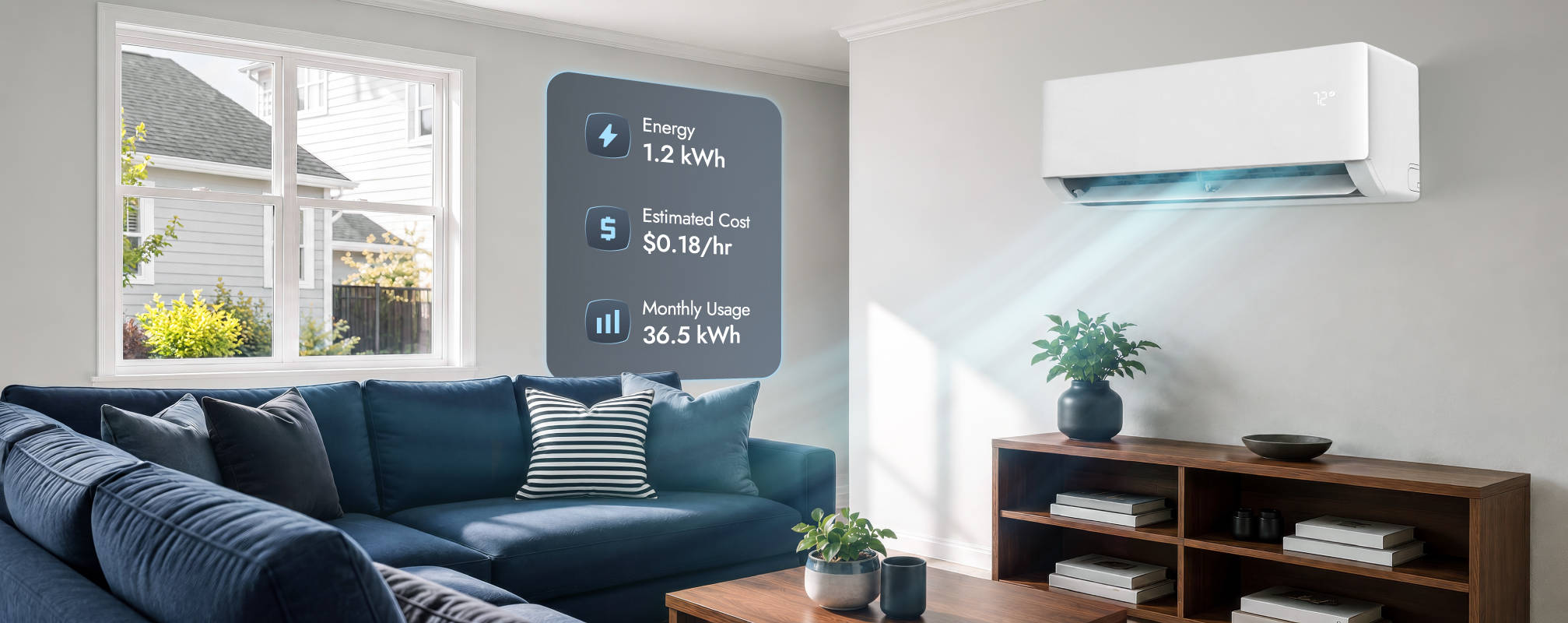
A typical 12,000 BTU mini split (covering roughly 500 square feet) might draw between 1,000 and 1,200 watts during operation. Running for 8 hours a day, that translates to roughly 8-9.6 kWh daily, though actual numbers vary based on the factors above.
Calculating Your Mini Split Monthly Cost
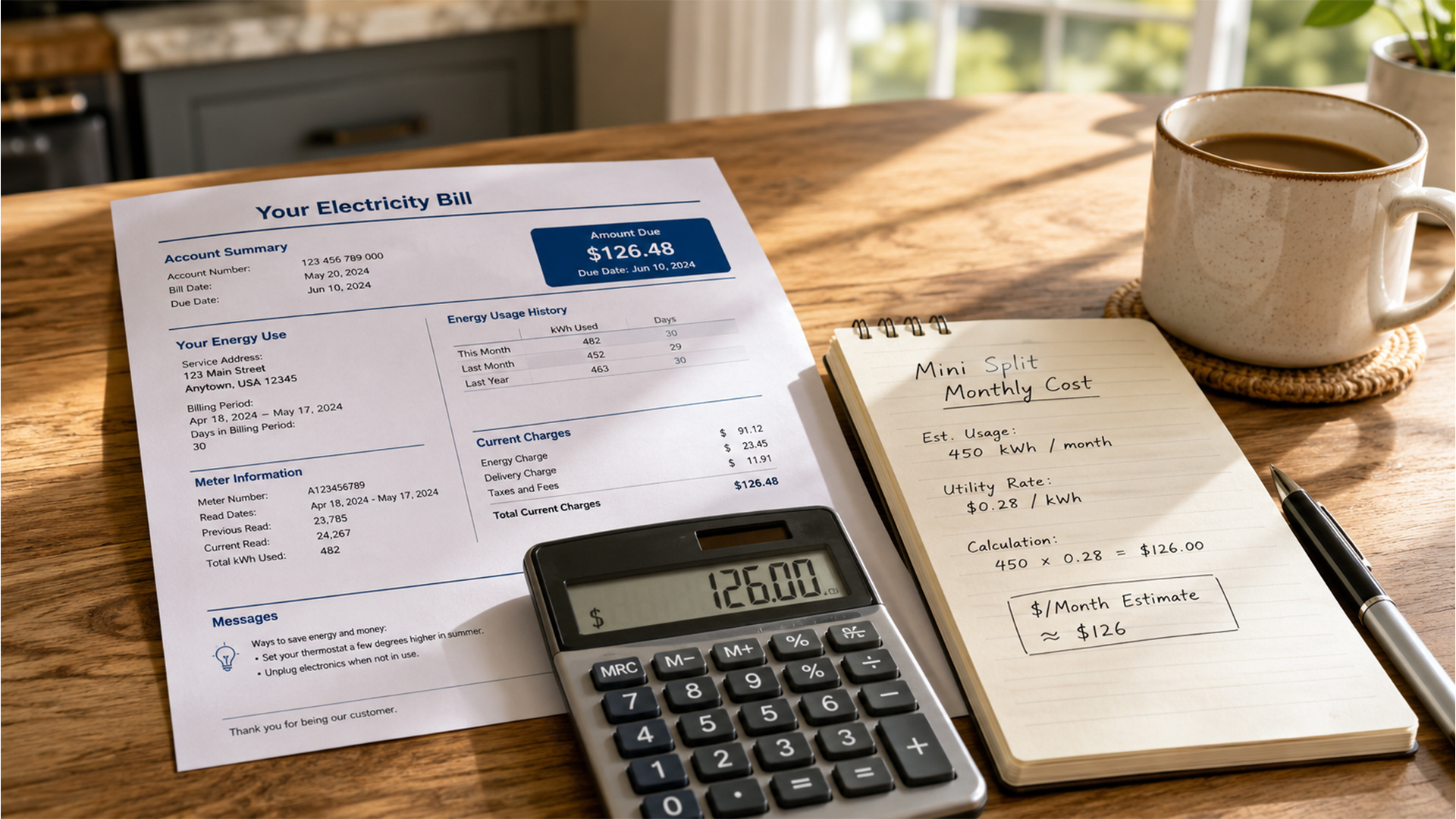
To estimate your mini split monthly cost, you'll need three pieces of information: your unit's wattage, your average daily runtime, and your local electricity rate (measured in cents per kilowatt-hour).
Sample Calculation
Here's a simple formula homeowners can use:
(Wattage ÷ 1000) × Hours of Use × Electricity Rate = Daily Cost
For example, if your unit uses 1,000 watts, runs for 8 hours a day, and your electricity rate is $0.15 per kWh:
(1,000 ÷ 1000) × 8 × $0.15 = $1.20 per day
Over a 30-day month, that comes to approximately $36 for that single zone. Multi-zone systems will obviously cost more, but each additional indoor unit typically adds a smaller incremental cost compared to running multiple separate window units or a central system covering the same square footage.
Average Monthly Cost Ranges
Based on typical usage patterns across different climates, homeowners can expect:
Mild climates (occasional use): $20-$40 per month per zone
Moderate climates (regular daily use): $40-$70 per month per zone
Extreme climates (near-constant use): $70-$120+ per month per zone
These figures assume a moderately efficient unit (16-20 SEER) and average national electricity rates, which currently hover around $0.15-$0.18 per kWh in many regions.
Why an Energy Efficient Air Conditioner Saves You Money
Choosing an energy efficient air conditioner is one of the most impactful decisions you can make when it comes to long-term operating costs. The difference between a low-efficiency unit and a high-efficiency one can be substantial—sometimes amounting to hundreds of dollars per year.
SEER Ratings Explained
SEER ratings indicate how much cooling output a unit produces per unit of electricity consumed over a season. Here's a general comparison:
13-14 SEER: Older standard, higher operating costs
16-18 SEER: Good efficiency, moderate savings over older units
20-24 SEER: High efficiency, premium pricing but lower long-term costs
25+ SEER: Top-tier efficiency, ideal for extreme climates or heavy use
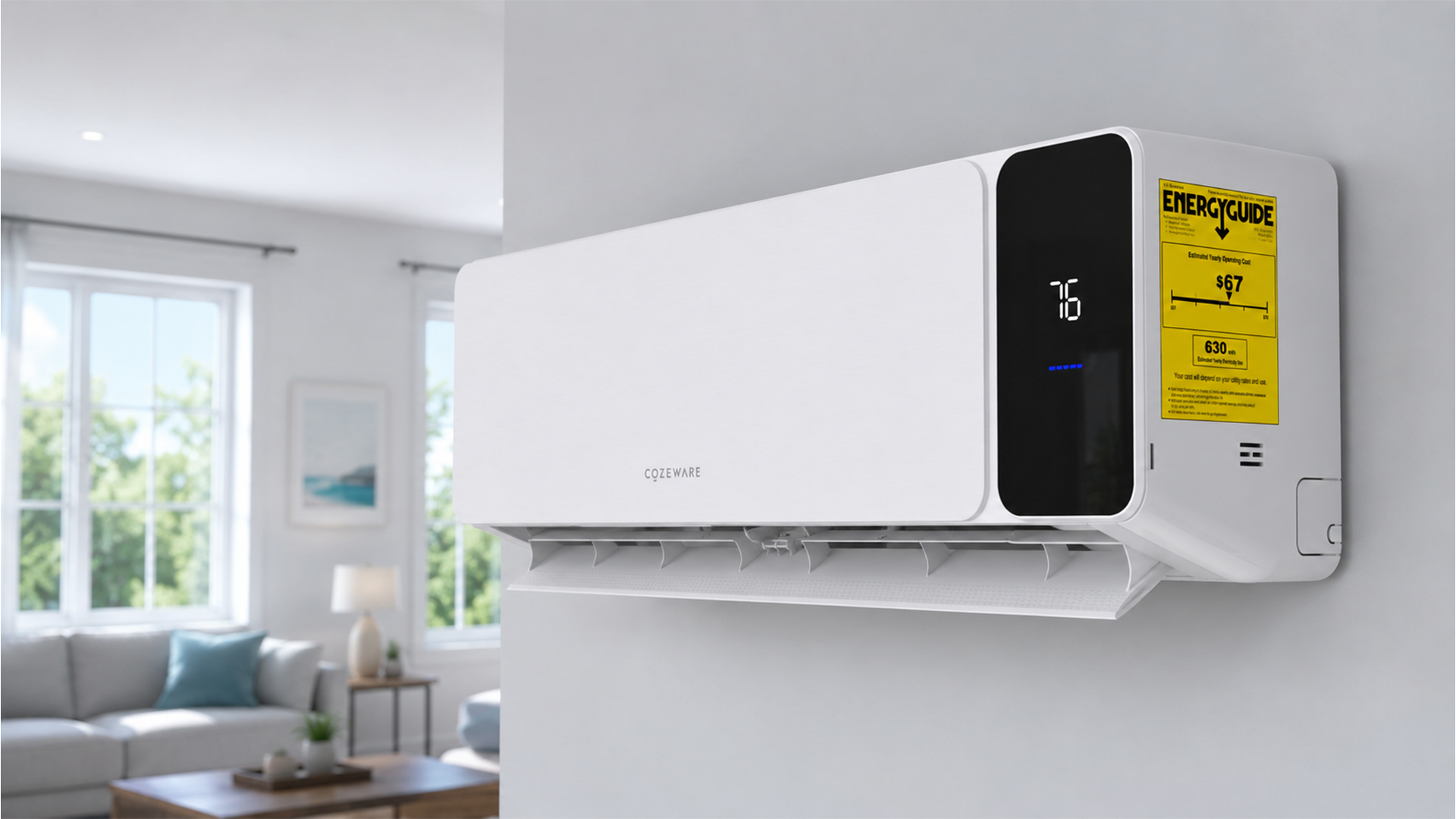
A unit with a 24 SEER rating can use up to 40% less electricity than a 14 SEER unit for the same cooling output. While higher-efficiency units cost more upfront, the difference is often recovered within a few years through lower utility bills—especially in climates with long cooling or heating seasons.
How to Reduce Cooling Costs With Your Mini Split
Beyond choosing an efficient unit, there are several practical strategies homeowners can use to reduce cooling costs without sacrificing comfort.
Practical Tips for Lowering Your Bill
Set a consistent temperature rather than constantly adjusting it, since frequent changes force the compressor to work harder
Use the "eco" or "sleep" mode during nighttime hours or when rooms are unoccupied
Clean or replace filters regularly—dirty filters restrict airflow and reduce efficiency
Seal air leaks around windows and doors near the unit to prevent cool air from escaping
Use ceiling fans in tandem with your mini split to circulate air more evenly, allowing for slightly higher thermostat settings
Take advantage of zoning—only cool or heat the rooms you're actually using
Implementing even a few of these habits can lead to noticeable reductions in your monthly energy bill, sometimes by 10-20% depending on your starting point.
Maximizing Mini Split Energy Savings Over Time
Long-term mini split energy savings come from a combination of smart purchasing decisions, proper installation, and consistent maintenance. Here's what to keep in mind for the lifespan of your system:
Maintenance That Pays Off
Schedule annual professional inspections to catch refrigerant leaks or component wear early
Keep the outdoor unit clear of debris, leaves, and snow to maintain airflow
Check that indoor units are level and properly mounted, as misalignment can affect performance
Monitor for unusual noises or reduced output, which often signal a need for service before costs increase
Long-Term Financial Perspective
When comparing total cost of ownership, mini splits often come out ahead of central HVAC systems, particularly for homes without existing ductwork (where installing ducts would be a significant additional expense) or for room additions where extending a central system isn't practical. Many utility companies also offer rebates for high-efficiency ductless systems, which can further offset both installation and ongoing costs.