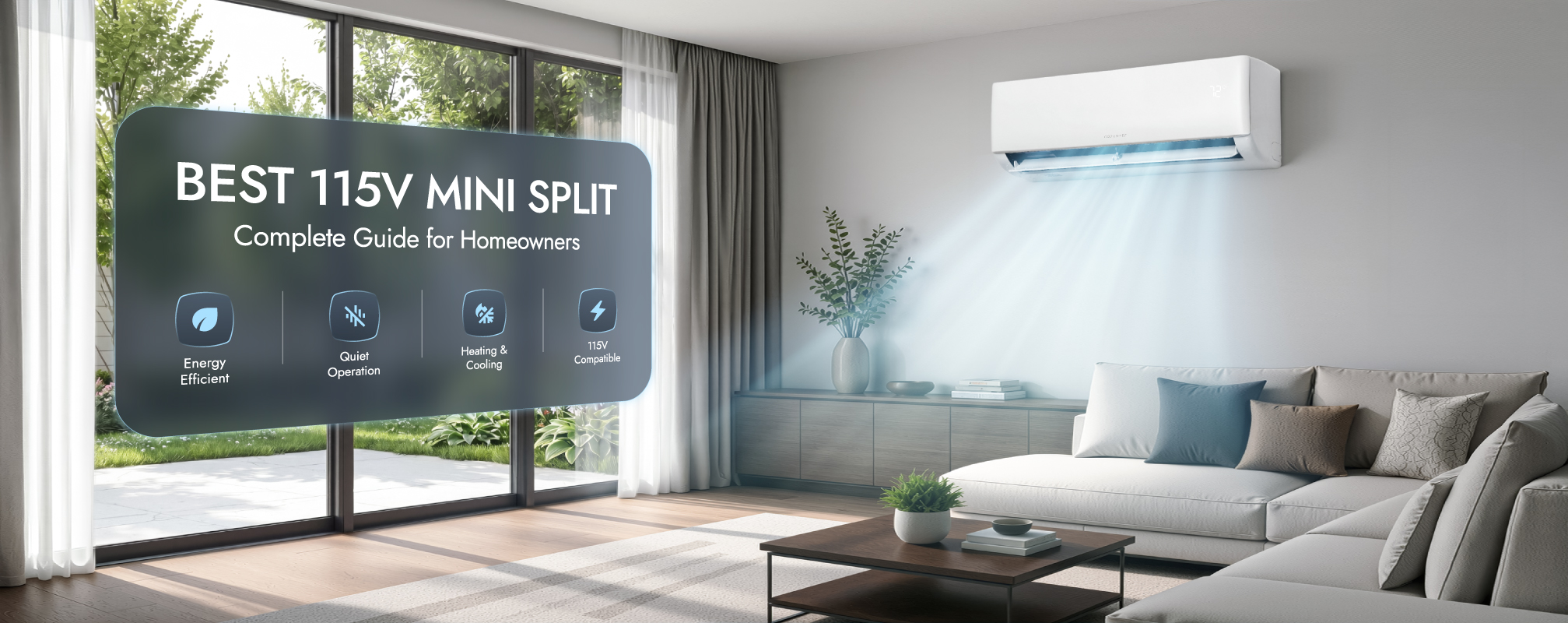
Choosing the best 115V mini split is becoming increasingly popular among homeowners who want efficient cooling and heating without complex electrical upgrades. A best 115V mini split is often used in smaller homes, apartments, garages, and offices because it can work with standard residential electrical systems while still delivering strong performance.
Many people also search for flexible solutions like a 115V ductless air conditioner, a mini split for standard outlets, or a 120V mini split system when comparing home cooling options. Understanding how these systems work will help you choose the right one for your space, budget, and comfort needs.
What Is a 115V Ductless Air Conditioner?
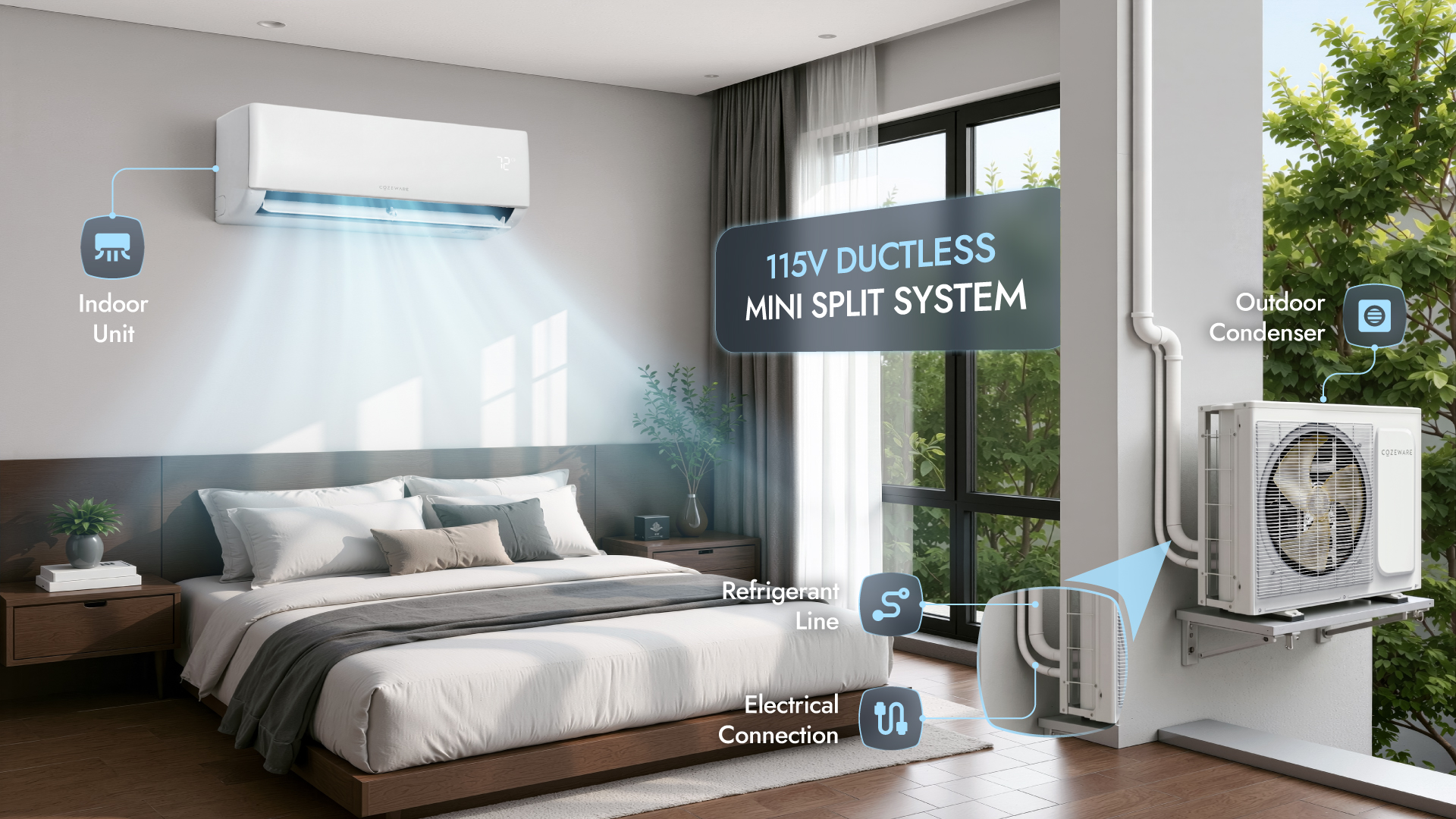
A 115V ductless air conditioner is a split system that operates on 115-volt residential power and does not require ductwork. It consists of:
Indoor air handler
Outdoor condenser
Refrigerant piping
Electrical connection system
Other names include:
ductless mini split AC
wall-mounted cooling system
split air conditioning system
A 115V ductless air conditioner is designed to deliver targeted cooling directly into a room, improving efficiency compared to traditional ducted systems that lose energy through airflow distribution.
Key Benefits
Zoned temperature control
Lower energy loss
Quiet operation
Heating and cooling in one system
Flexible installation
Mini Split for Standard Outlets Explained
Many homeowners search for a mini split for standard outlets, expecting a simple plug-in system. However, this term usually refers to systems compatible with existing residential electrical setups.
A mini split for standard outlets may also be described as:
plug-compatible AC system
home outlet air conditioner
household voltage cooling system
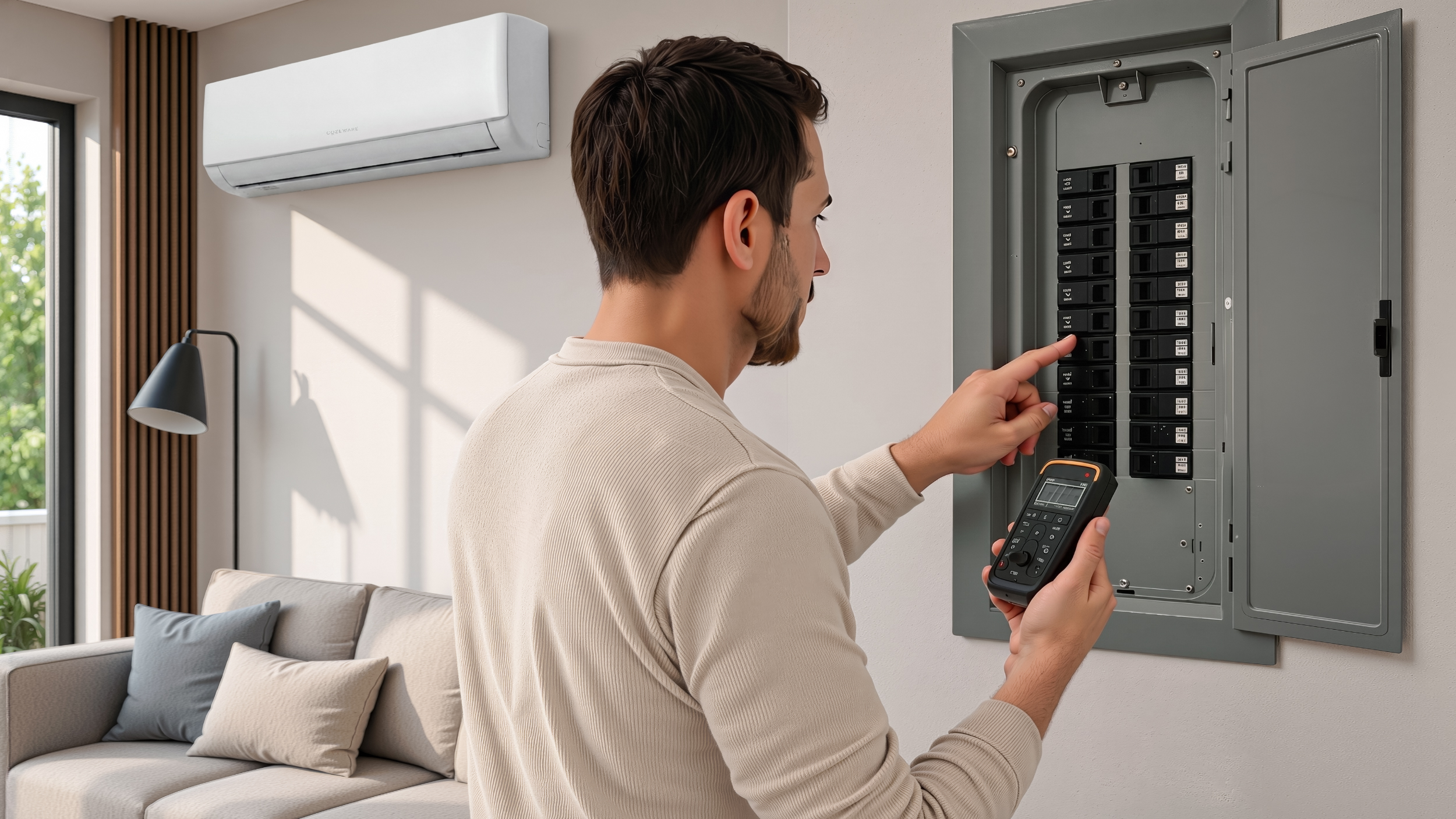
Important clarification: even when operating at 115V, most systems still require a dedicated circuit instead of direct plug-in use.
When It Makes Sense
A mini split for standard outlets is commonly used in:
Bedrooms
Small apartments
Home offices
Garages
Studios
Proper electrical assessment is still required before installation.
Understanding a 120V Mini Split System
A 120V mini split system is often used interchangeably with 115V systems because residential voltage levels vary slightly depending on region and electrical standards.
Related terms include:
low-voltage AC system
residential voltage mini split
household cooling system
A 120V mini split system is commonly chosen for compact spaces where efficiency and simple electrical compatibility are priorities.
Synonyms Used in Industry
low-voltage mini split AC
standard residential voltage system
Best Applications
Small homes
Bedrooms
Office rooms
Workshops
Converted garages
Proper BTU sizing is essential to ensure performance and efficiency.
Mini Split Without 220V Wiring Advantages
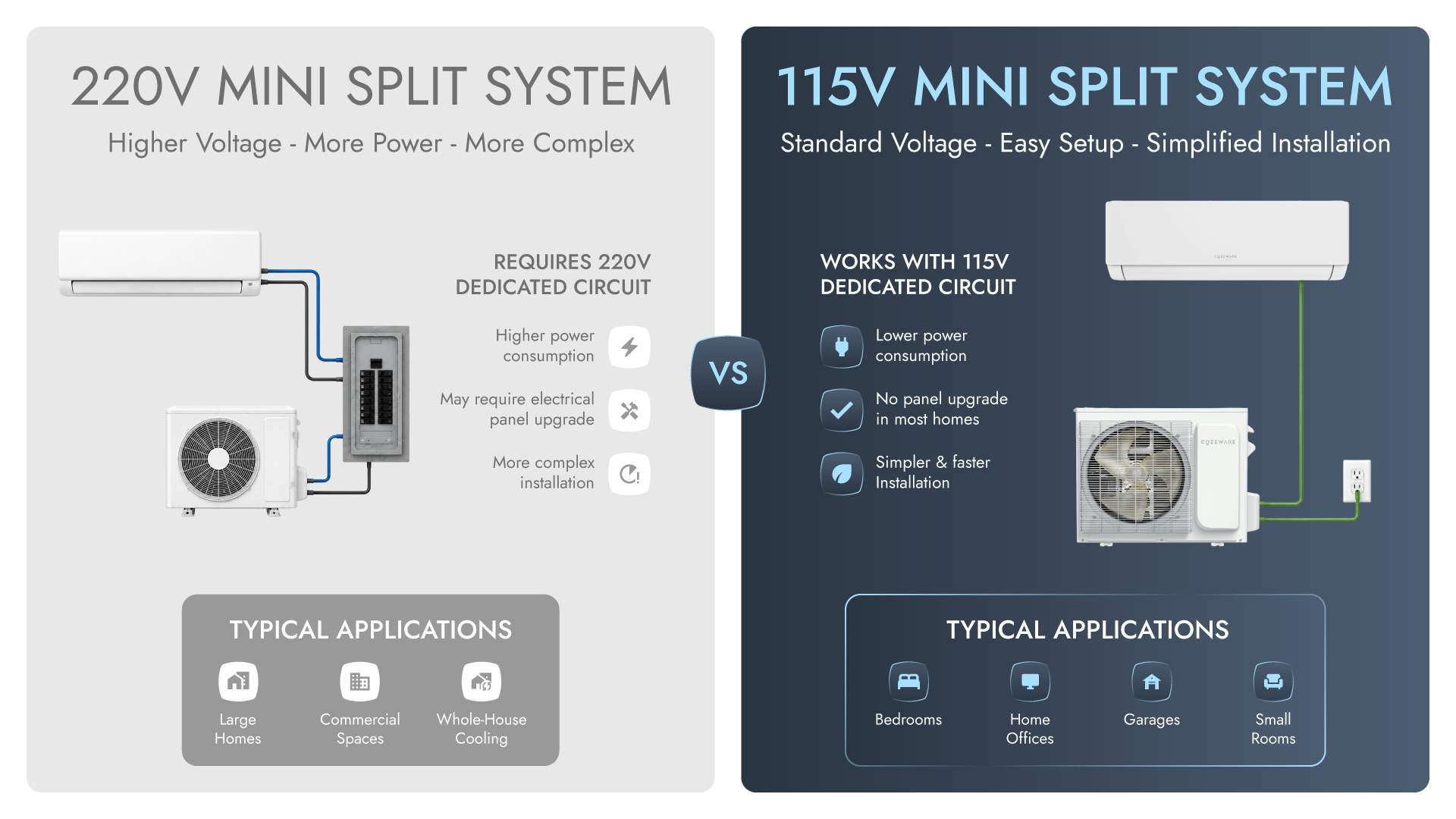
A mini split without 220V wiring is appealing for homeowners who want to avoid electrical upgrades required by higher-voltage HVAC systems.
This type of system is often referred to as:
no 220V air conditioner
low-voltage HVAC system
simplified electrical AC system
A mini split without 220V wiring allows installation in homes that already support 115V circuits without requiring major electrical changes.
Installation Notes
Even without 220V wiring, installation still requires:
Proper circuit verification
Compliance with electrical codes
Professional HVAC setup
Safe grounding and wiring practices
Why Energy Efficient 115V AC Matters
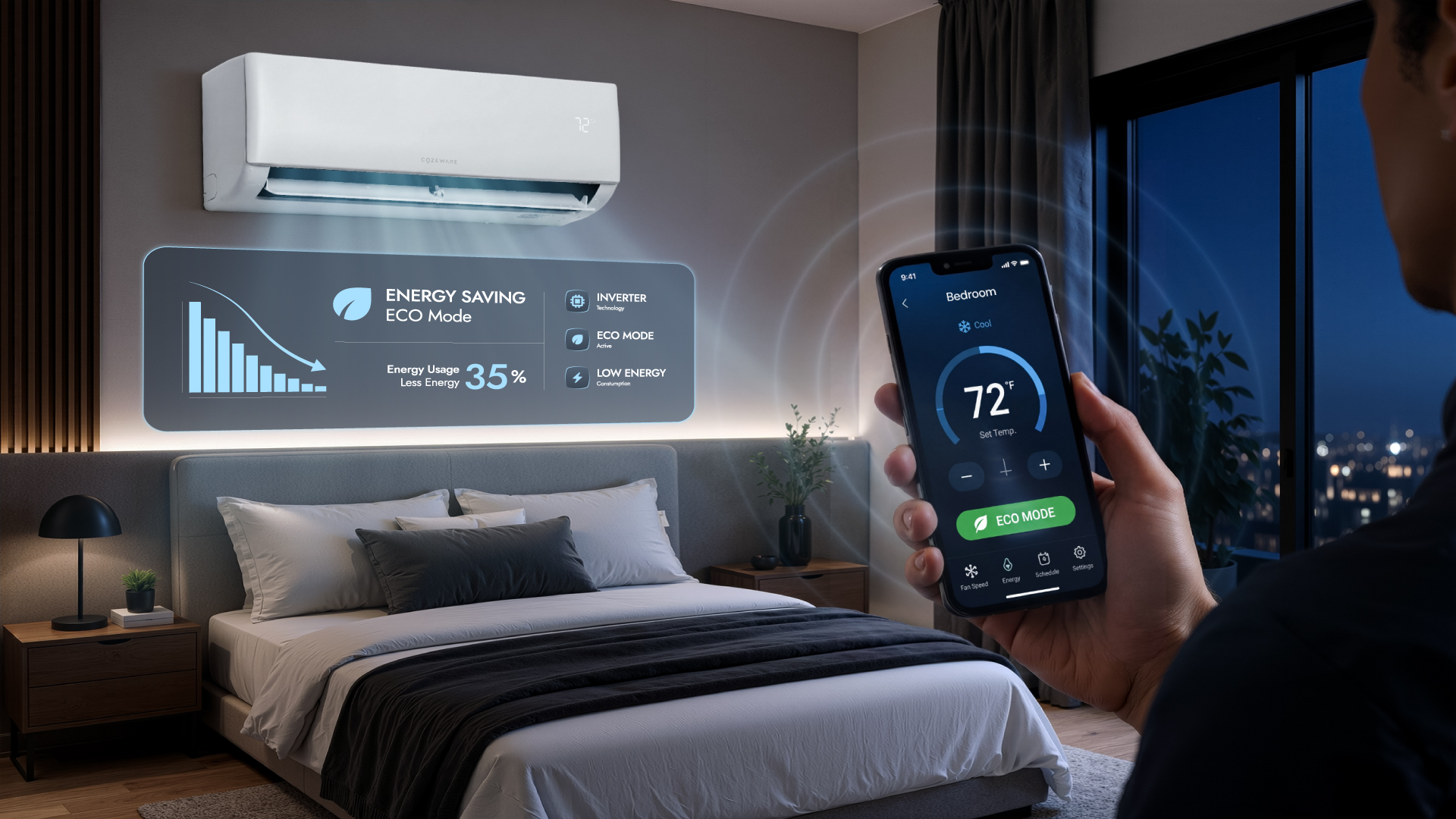
An energy efficient 115V AC helps homeowners reduce electricity costs while maintaining stable indoor comfort. Modern systems use inverter technology to adjust cooling output based on demand instead of constantly turning on and off.
Common related terms:
high-efficiency mini split
energy-saving air conditioner
inverter ductless AC system
Efficiency Features
High SEER2 rating
Inverter compressor technology
ECO energy mode
Smart temperature control
Low power consumption
An energy efficient 115V AC can help reduce long-term operating costs while improving comfort stability.
How to Choose the Best 115V Mini Split
When selecting the best 115V mini split, consider these important factors:
Room Size
Match BTU capacity with room dimensions for proper cooling.
Energy Efficiency
Higher SEER2 ratings typically provide better long-term savings.
Noise Level
Low noise systems are ideal for bedrooms and workspaces.
Smart Features
Modern systems may include:
Mobile app control
Voice assistant compatibility
Timer scheduling
Multiple operation modes
These features improve convenience and energy optimization.